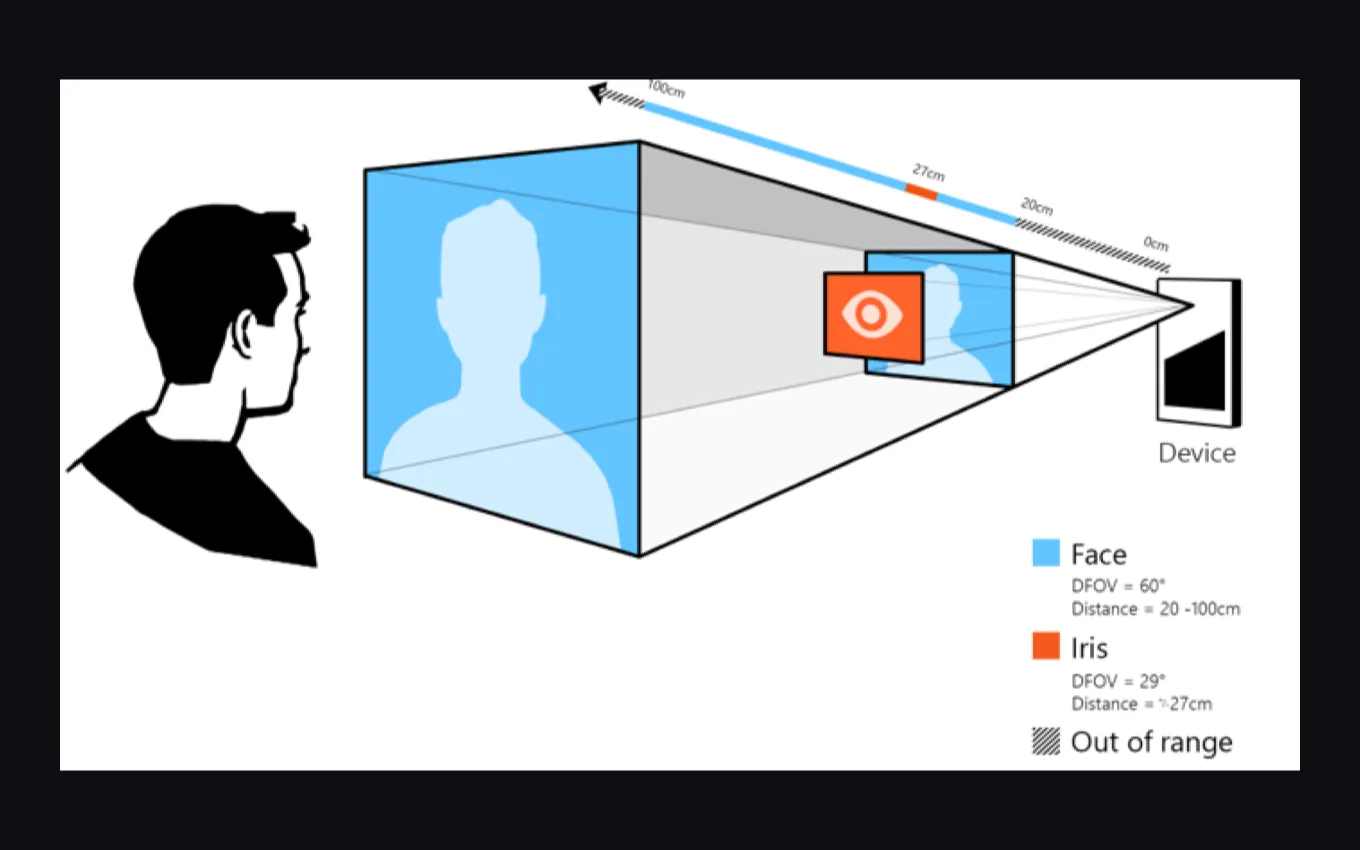
Windows Hello arrived as a research project with a spec: field of view, working distance, false accept rate. My job was to work out how those numbers might feel to somebody holding a phone.
Recognition is not a yes or a no. It is a rising confidence, and the honest design question is what to show while it rises.
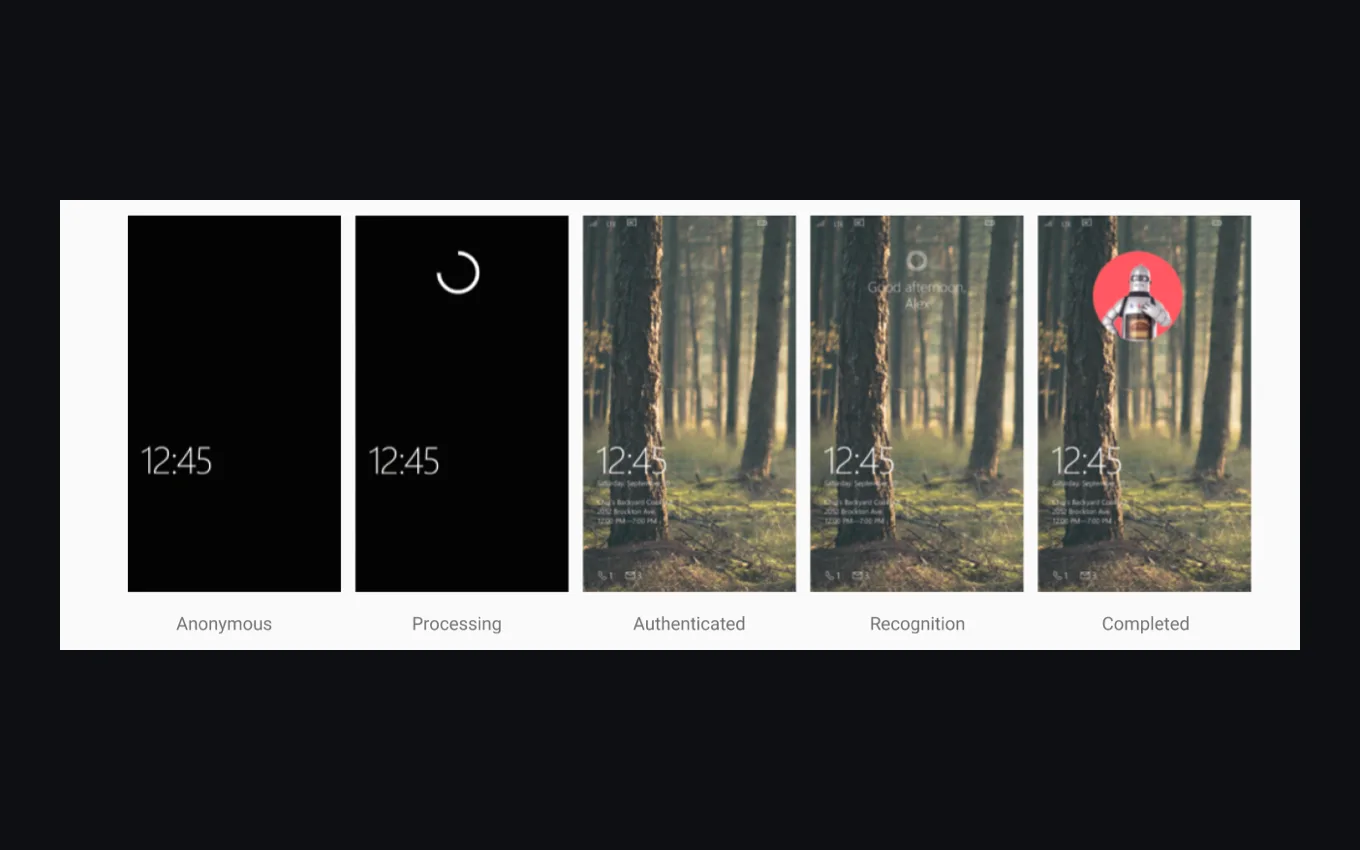
Metered unlock was the answer. Personal content arrives in steps as certainty firms up. A stranger standing near your phone gets a clock on black. You get your name, then your notifications, then your face.
That is a privacy control that never mentions privacy. Nobody reads a setting; the screen simply declines to say your name to someone it does not recognise.
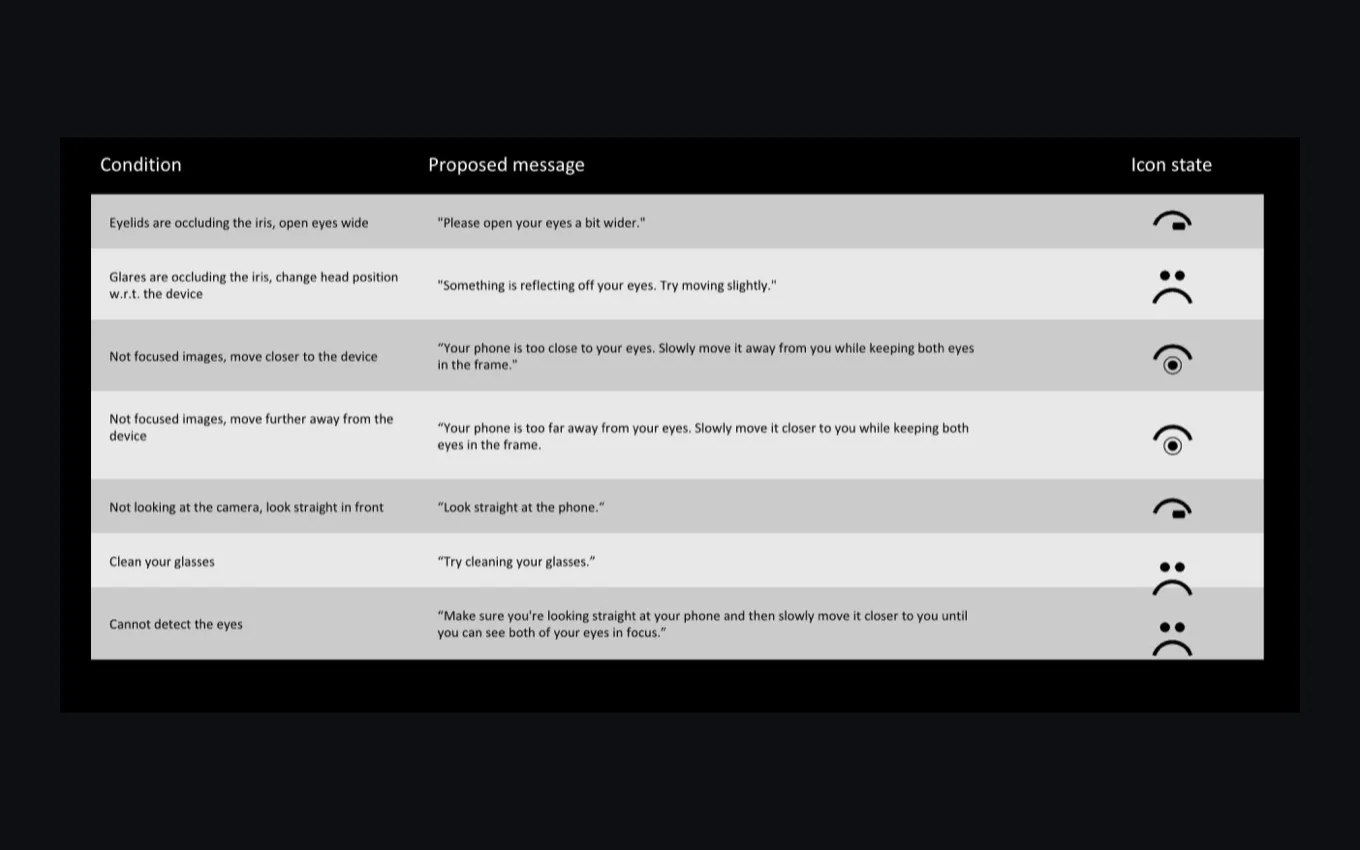
The other half is failure. Iris recognition fails for dull physical reasons — glare, glasses, eyelids, distance — and each one has a different fix. So each one got its own sentence: “Something is reflecting off your eyes. Try moving slightly.” Never “authentication failed”, which tells you nothing and blames you for it.
What is not here: no adoption or accuracy figures, and these are project artifacts rather than shipped screens. This was 2015; I have kept asking the same question since, most recently of language models.